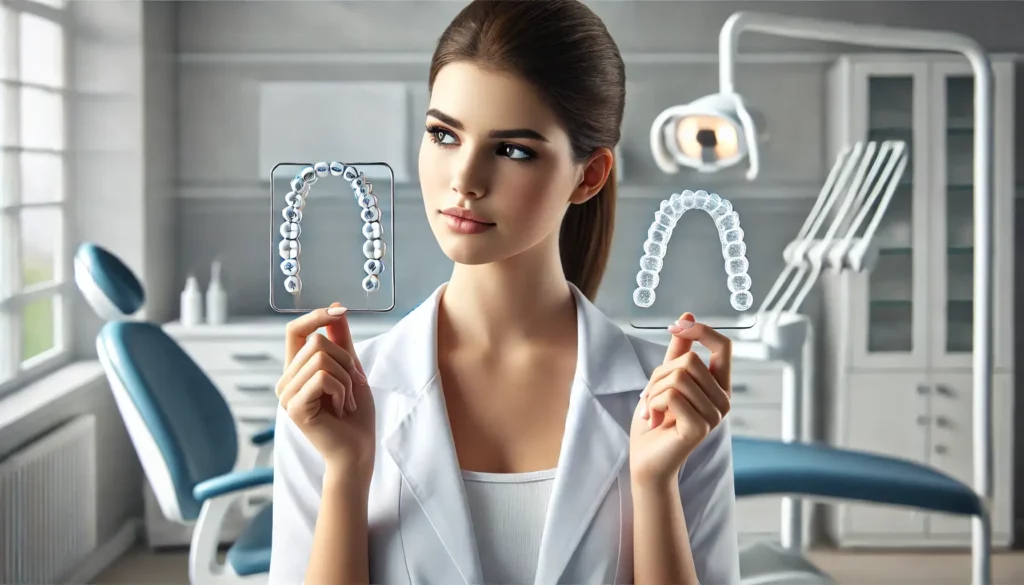
Clear Aligners vs. Braces: Why Invisalign is the Future of Orthodontics
When it comes to orthodontic solutions, both metal braces and clear aligners offer unique advantages, depending on what you’re looking for. Whether you prioritize a discreet appearance or need more comprehensive alignment, it’s essential to choose the option that fits your lifestyle and dental goals.
Each solution brings its own benefits. For instance – aligners are most convenient when it comes to correcting minor teeth misalignments, while braces can help you with problems like correcting bites.
At Kraja and Sidhu Dental, we offer both traditional braces and clear aligners, providing our patients with a full range of orthodontic treatments tailored to their individual needs.
Our blog will discuss everything you need to know about clear aligners vs. traditional braces, comparing factors like cost, comfort, maintenance, and long-term benefits. By the end, you’ll have a better understanding of how both options work and which might be the right fit for your specific orthodontic needs.
Clear Aligners vs. Braces – Detailed Comparison Table
| Category | Clear Aligners (Like Invisalign) | Traditional Braces |
|---|---|---|
| Appearance | Clear, nearly invisible aligners. | Metal or ceramic brackets that are visible. |
| Comfort | Smooth plastic, no sharp edges or irritation. | Brackets and wires can cause discomfort. |
| Effectiveness | Ideal for mild–moderate crowding/spacing/bite issues. | Best for complex misalignments and severe bite issues. |
| Treatment Duration | Typically 6–18 months; fewer appointments. | Usually 12–36 months with regular adjustments. |
| Hygiene | Easy to remove for brushing and flossing. | Requires meticulous cleaning around brackets & wires. |
| Maintenance | Few repairs; aligners rarely need replacing. | Frequent repairs (broken brackets/wires). |
| Dietary Restrictions | None — remove aligners to eat. | Avoid hard, sticky, chewy foods. |
| Cost | $3,000–$5,980; fewer long-term repairs. | $4,000–$10,000; more repairs & adjustments. |
| Convenience | Fewer office visits; adjust during cleanings. | More visits for adjustments/repairs. |
| Use Cases | Best for mild–moderate cases. | Ideal for very complex cases and severe misalignments. |
| Overall Value | Great for comfort, flexibility, long-term savings. | Effective for severe issues; higher maintenance. |
Comfort and Appearance: Why Invisalign is a Game-Changer
Traditional braces are hard to miss. Metal brackets and wires can make anyone feel self-conscious, not to mention the discomfort that comes with adjustments. Clear aligners like Invisalign can be quickly taken away at any moment. Invisalign also comes with a convenient storage box for unmatched comfort.
In short, Aligner sets are designed to fit smoothly into your life, offering a nearly invisible solution to straighten your teeth without the hassle.
- Clear Aligners: Imagine straightening your teeth without anyone even noticing. That’s the magic of clear aligners—smooth, discreet, and comfortable. Unlike braces, they’re made from custom-molded, transparent plastic that slips right over your teeth. No irritation, no sharp edges.
- Traditional Braces: Metal braces are visible—and there’s no way around that. Even with tooth-colored brackets and wires, you still deal with noticeable components. And let’s not forget the discomfort, especially after adjustments, when your mouth feels sore and irritated for days. Plus, there’s the extra effort of avoiding certain foods and worrying about wires poking your gums.
Pro Tip from Dr. Sidhu
Clear aligners give you the freedom to straighten your teeth without feeling self-conscious. They’re not just effective—they’re liberating.
Explore Our Clear AlignersOrthodontic Effectiveness: Use Case for Aligners vs. Braces
When it comes to straightening your teeth, not all orthodontic options are created equal. Both clear aligners and traditional braces have their strengths, but it’s important to choose the option that best fits your unique needs.
- Clear Aligners: If you’re dealing with mild to moderate alignment issues—like crowding, spacing, or minor bite adjustments—clear aligners are often the best solution. They fit snugly over your teeth, gently shifting them into place without the need for bulky wires or brackets. They’re also incredibly precise: studies show that 80-90% of patients who used clear aligners saw a significant improvement in their alignment within the first 18 months.
- Traditional Braces: For more complex issues, such as severe jaw misalignment or bite problems, traditional braces might be the better option. Thanks to the consistent pressure they apply, braces are great at handling significant jaw and tooth adjustments. However, they require more frequent visits for tightening and adjusting.
Pro Tip from Dr. Sidhu
For severe cases, braces may still be necessary, but for most patients, aligners get the job done comfortably and efficiently.
Read our guide to restorative dentistryTreatment Duration and Appointments: Clear Aligners Save You Time
One of the biggest perks of Invisalign? They’ll have you in and out of the dentist’s chair faster than traditional braces. With fewer appointments and shorter overall treatment time, they’re the perfect choice for busy patients who want results without the hassle.
- Clear Aligners: For mild to moderate cases, clear aligners typically take 6 to 18 months to complete treatment. Even better, you’ll only need to visit the dentist every 6-8 weeks for quick check-ins and cleanings. You can even combine your routine dental cleanings with your aligner adjustments, reducing trips to the dentist.
- Traditional Braces: Braces, on the other hand, can take 12 to 36 months depending on the complexity of your alignment issues. Regular visits for adjustments are necessary, and they often require more frequent maintenance. You’re looking at appointments every 3-5 weeks
Hygiene and Maintenance: Keep It Clean, Keep It Simple with Invisalign
One of the standout benefits of Invisalign is how easy it is to keep up with your oral hygiene. Unlike traditional braces, which require careful cleaning around brackets and wires, Invisalign aligners are removable—meaning brushing, flossing, and eating are a breeze.
- Invisalign: Maintaining excellent oral hygiene is simple with Invisalign. Just pop out the aligners, brush, and floss as usual, and snap them back in. There is no need to worry about food getting stuck or hard-to-reach spots. The aligners can be cleaned using a soft toothbrush or special cleaning crystals.
- Traditional Braces: Braces, on the other hand, require meticulous cleaning. Food particles love to get trapped between the wires and brackets, and flossing can become a tricky (and time-consuming) task. If not properly cleaned, braces can lead to plaque buildup, which increases the risk of cavities and gum disease – a severe potential side effect of wearing braces.
Pro Tip from Dr. Sidhu
Invisalign makes it easy to maintain your dental hygiene routine without added work. With braces, patients often struggle with proper cleaning, but aligners let you brush and floss with no extra hassle.
check out our alignersDietary Freedom: Eat What You Love with Clear Aligners
Let’s talk food – because, with Invisalign, you can enjoy all your favorite meals without restrictions. One of the biggest complaints about traditional braces is the long list of foods you have to avoid to keep your brackets intact. But with clear aligners, you can remove your aligners before meals and dig in!
- Invisalign: There are no food restrictions with Invisalign. Craving crunchy apples, chewy bagels, or your favorite popcorn? Go ahead and enjoy them! Since you remove your aligners to eat, there’s no risk of damaging them with food. Just make sure to brush your teeth before putting your aligners back in to keep everything fresh and clean.
- Traditional Braces: With traditional braces, you’ll need to avoid hard, sticky, or chewy foods – popcorn, gum, nuts, and even some fruits can damage the wires and brackets.
Pro Tip from Dr. Sidhu
Invisalign lets you eat without worry. There are no ‘off-limits’ foods, so you can enjoy meals as usual while staying on track with your treatment
Get your invisalign todayLifetime Cost and Durability: Invisalign Offers Long-Term Savings
When it comes to straightening your teeth, it’s important to think beyond the initial cost. While braces and Invisalign may seem similar in price upfront, Invisalign often ends up being the more cost-effective choice in the long run. Why? Fewer repairs, fewer emergency visits, and longer-lasting results.
- Invisalign: The typical cost of an Invisalign set of aligners is $6,000 but what you save in maintenance and repairs makes it the better investment over time. Since there are no brackets or wires to break, there are fewer unexpected dentist visits for repairs. Plus, Invisalign aligners are durable and rarely need replacing, unless lost or damaged.
- Traditional Braces: The initial cost of traditional braces can range from $3,000 to $10,000, depending on the complexity of the case and whether you opt for metal or ceramic braces. But don’t forget about the cost of repairs! Brackets can break, wires can loosen, and these unexpected issues can add up, requiring additional appointments and costs.
Invisalign vs Braces: Choosing the Winner
When it comes to straightening your teeth, Invisalign stands out as the clear winner for most patients. With fewer appointments, no food restrictions, and a streamlined cleaning routine, it offers a modern, hassle-free approach to orthodontic care. The long-term cost savings and comfort make Invisalign the smarter choice for anyone looking to align their smile with minimal disruption to their life.
That being said – Braces may still be a suitable treatment for patients with more severe issues such as tooth crowding, weak bite force, or jaw misalignment.
If you’re ready to explore how Invisalign at Kraja and Sidhu Dental can give you the smile of your dreams, book a free consultation today! Our team is here to guide you through every step of the process.